
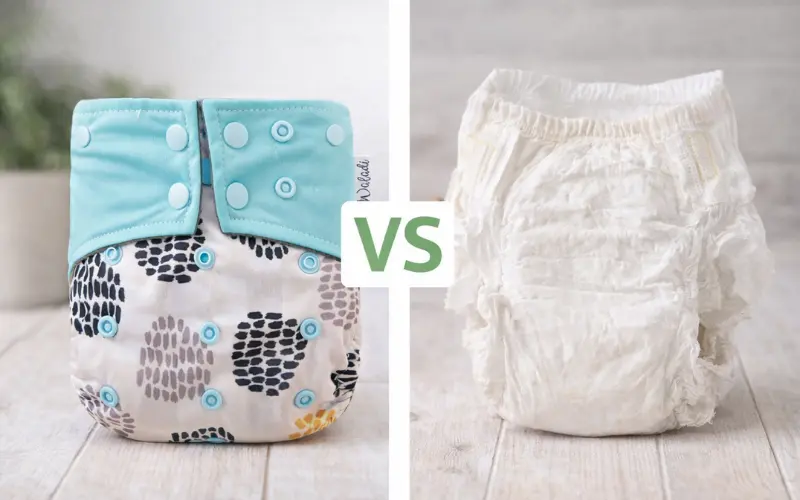
Choosing between cloth nappies and disposable nappies can feel surprisingly overwhelming. Cost, convenience, environmental impact, and your baby’s skin all come into it – and the internet can make it feel like you have to pick a “side”.
This guide is a genuinely honest comparison to help you choose what works for your family – without guilt. If you’re new to cloth and want a comprehensive overview, start with our hub guide: The Ultimate Beginner’s Guide to Cloth Nappies.
If you’re ready to browse modern options, you can explore our reusable cloth nappies range here.

What this guide covers
On this page
- Quick comparison snapshot
- Cloth vs. Disposable – Comparison Table
- Environmental impact
- Cost comparison
- Convenience and day-to-day reality
- Health, comfort and nappy rash
- Which option suits your lifestyle?
- Common myths cleared up
- FAQs
- Next steps
Quick comparison snapshot
If you want the quick version, here it is:
- Cloth nappies can cut down landfill waste and usually cost less long term, but they do require washing and a bit of routine.
- Disposable nappies are the easiest option day-to-day, but they create much more waste and typically cost more over time.
💡 Tip: You don’t have to choose all-or-nothing. Many families use cloth at home and disposables for nights, daycare, or travel – and still get meaningful benefits.
Cloth nappies vs disposable nappies – comparison table
This table is designed to answer the main “which is better?” questions quickly.
| Factor | Cloth nappies | Disposable nappies |
|---|---|---|
| Upfront cost | Higher upfront spend, then low ongoing costs | Low upfront, ongoing spend every week |
| Long-term cost | Usually cheaper over time, especially for siblings | Usually more expensive over the nappy years |
| Convenience | Needs washing and storage, small learning curve | Fast changes, no washing, easiest for travel |
| Waste | Very low landfill waste | High landfill waste (single-use) |
| Water and energy | Used during washing and drying | Used during manufacturing and transport |
| Skin and rash | Great for sensitive skin when changed regularly and washed well | Very absorbent, but some babies react to materials or fragrances |
| Best for | Families who can manage laundry and want less waste | Families who prioritise convenience and flexibility |
Environmental impact – waste, water and carbon
Landfill waste
Disposable nappies are single-use. Over the nappy years, one child can go through thousands of nappies – and most end up in landfill. Cloth nappies replace those thousands with one reusable stash.
Water and energy
Cloth nappies do use water and electricity because they need washing. But disposables also use water and energy during production – it’s just less visible. The real difference is that disposables create ongoing waste with every change.
What makes cloth more sustainable?
Cloth nappies tend to be most sustainable when you:
- Wash in full loads (not tiny cycles)
- Use a practical wash routine
- Line dry where possible
- Reuse for a second child or pass on / sell second-hand
💡 Tip: If wash routines feel like the biggest barrier, our hub guide breaks it down simply: Beginner’s Guide to Cloth Nappies.
Cost comparison – upfront vs long term
Disposable nappies
Disposables often feel cheaper week-to-week, but the total adds up across 2-3 years (or longer). You’re essentially paying for nappies continuously until toilet training.
Cloth nappies
Cloth nappies cost more upfront, but your ongoing costs are mainly washing. If you reuse your nappies for a second baby, the “cost per change” drops again. Many families also start small, then build their stash gradually.
If you’re unsure how many you actually need, this post pairs perfectly with our stash guide: How Many Cloth Nappies Do You Really Need?
Convenience and day-to-day reality
What disposables do best
- Fast changes
- No washing or drying
- Easy for travel, daycare, and nights
What cloth does best
- No emergency “we ran out” moments once you have a stash
- Lower long-term cost
- Far less waste
- Flexibility – you can boost absorbency with inserts
Most parents find that cloth diapering becomes easy once it’s part of the routine. Pocket-style modern cloth nappies, in particular, are designed to go on much like a disposable.
Health, comfort and nappy rash
The biggest driver of nappy rash is usually time in a wet or dirty nappy, not the type of nappy. Both options can work well when you change regularly and keep the baby’s skin clean and dry.
Disposables
- Very absorbent, often keeps skin feeling drier
- Some babies react to fragrances or certain materials
Cloth
- Soft fabrics can be lovely for sensitive skin
- Needs a good wash routine so nappies come out clean and fresh
- More frequent changes can help reduce irritation for some babies
If you’re using cloth and want to understand absorbency better (especially for naps and nights), our inserts guide helps: Cloth Nappy Inserts FAQs.
Which option suits your lifestyle?
Here’s a simple way to think about it:
Cloth nappies can be a great fit if you:
- Can manage laundry every 1-2 days
- Have drying space (even indoors with ventilation)
- Want to reduce waste and save money over time
- Like the idea of being less dependent on constant shopping
Disposable nappies may suit you if you:
- Need the simplest possible routine right now
- Travel frequently or rely on daycare requirements
- Are in a season where mental load is already maxed out
And again, the middle ground is common. Cloth at home, and disposables when life is hectic, is still a very valid and normal choice.
Common myths – cleared up
Myth 1: “Cloth nappies aren’t really better for the environment.”
Cloth nappies can be significantly better when washed efficiently and reused over time. The biggest environmental benefit is reducing ongoing landfill waste.
Myth 2: “Disposables prevent nappy rash.”
Disposables can keep skin drier, but rash is usually more linked to how often nappies are changed and how the baby’s skin responds.
Myth 3: “Modern cloth nappies are complicated.”
Modern cloth nappies are shaped like disposables, use snaps, and are designed for busy parents. There’s a learning curve, but it’s usually short – especially with pocket nappies.
FAQs
Are cloth nappies worth it in Australia?
For many families, yes – especially if you reuse nappies across multiple children or use cloth most of the time. Even part-time cloth can reduce waste and cut costs.
What’s the easiest way to start with cloth?
Start small with a few nappies, see what fits your routine, then build your stash. Our hub guide makes the first steps simple: Beginner’s Guide to Cloth Nappies.
Can I use a mix of cloth and disposables?
Absolutely. Many parents use cloth at home and disposables for nights, travel, or childcare. It’s a practical approach that still makes a difference.
Do cloth nappies cause more nappy rash?
Not necessarily. Rash is usually linked to time in a wet nappy and skin sensitivity. With regular changes and a solid wash routine, cloth nappies can be very gentle on the baby’s skin.
Next steps
If cloth nappies feel like a good fit, here are the best places to go next:
- Browse our reusable cloth nappies
- Read the full hub guide: The Ultimate Beginner’s Guide to Cloth Nappies
- Learn about absorbency: Cloth Nappy Inserts FAQs