
If your baby is starting swimming lessons, you’ve probably asked yourself:
Reusable vs disposable swim nappies – which is better?
Both are widely accepted in Australian pools. Both are designed specifically for water use. But depending on how often you swim, your routine, and what matters most to your family, one option may suit you better.
Let’s break it down clearly and honestly.
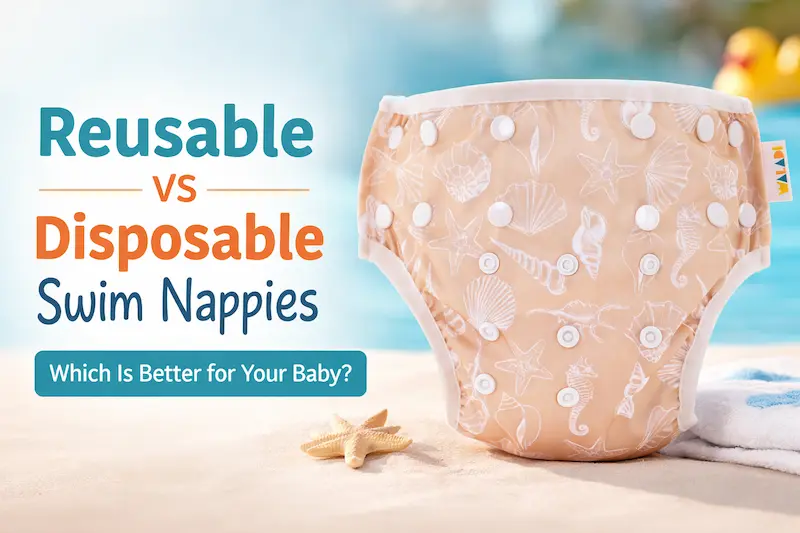
Reusable vs Disposable Swim Nappies – Quick Comparison
Reusable swim nappies are generally better for families who swim regularly because they are more cost-effective, adjustable, and environmentally friendly. Disposable swim nappies can be convenient for occasional swimming or travel but require ongoing purchases and create more waste.
Here’s a side-by-side comparison:
| Feature | Reusable Swim Nappies | Disposable Swim Nappies |
|---|---|---|
| Designed for swimming | Yes | Yes |
| Holds urine | No | No |
| Contains solids | Yes | Yes |
| Reusable | Yes | No |
| Cost over time | Lower | Higher |
| Adjustable sizing | Often | Rare |
| Environmental impact | Minimal waste | Ongoing landfill |
| Best for weekly lessons | Yes | Less practical |
Now let’s look deeper.
What Do Swim Nappies Actually Do?
Before comparing reusable and disposable swim nappies, it’s important to understand their purpose.
Swim nappies are designed to:
- Contain solid accidents
- Maintain pool hygiene standards
- Fit securely in water
They are not designed to absorb urine.
This applies to both reusable and disposable swim nappies.
Unlike regular nappies, baby swim nappies do not contain absorbent materials that swell when wet. That’s why normal nappies cannot be worn in the pool – they absorb water, sag, and can break apart.
If you’ve ever seen a disposable nappy after it falls into the bath, you already understand why pools don’t allow them.
Why Australian Pools Require Proper Swim Nappies
Public pools in Australia operate under strict hygiene guidelines.
If a solid accident occurs without a properly fitted swim nappy:
- The pool may need to close temporarily
- Water treatment procedures may be required
- Lessons can be disrupted
Swim nappies exist to reduce contamination risk and keep facilities operating safely.
Fit is far more important than whether the nappy is disposable or reusable.
Disposable Swim Nappies – When Do They Make Sense?
Disposable swim nappies are:
- Single-use
- Lightweight
- Easy to grab for holidays
- Convenient for rare swimming occasions
If you’re travelling or swimming once or twice a year, disposables can be practical.
You use them and discard them.
However, if swim school becomes part of your weekly routine, the cost and waste can add up quickly.
Reusable Swim Nappies – Why Many Parents Prefer Them
Reusable swim nappies are designed to be rinsed, washed, and reused.
For families doing regular swim lessons in Australia, they often become the more sensible option.
Here’s why.
1. Cost Over Time
One disposable swim nappy per lesson may not seem like much.
But over 40–50 swim sessions per year, it adds up.
Reusable swim nappies are typically a one-time purchase and can last through growth stages, especially when adjustable sizing is included.
For families attending weekly swimming lessons, reusable options usually offer better long-term value.
👉 You can explore Waladi’s full range of reusable swim nappies
2. Fit & Security
The most important feature of any swim nappy is a snug fit.
A properly fitted swim nappy should:
- Sit securely at the waist
- Seal firmly around the legs
- Stay in place during kicking and movement
Reusable swim nappies often include adjustable snaps and reinforced elastic barriers, which can provide a more secure fit.
And when you’re poolside, hoping for a smooth lesson, that extra security matters.
3. Comfort in the Water
Babies wriggle constantly.
Reusable swim nappies are typically:
- Lightweight
- Flexible
- Soft against the skin
- Quick-drying
Some disposable swim nappies can shift or bunch during active movement, particularly in longer sessions.
For energetic little swimmers, comfort makes a noticeable difference.
Are Reusable Swim Nappies Hygienic?
This is one of the most common concerns parents have.
Yes – reusable swim nappies are hygienic when used properly.
They work the same way disposable swim nappies do:
- They do not absorb urine
- They are designed to contain solids
- They rely on a secure fit
After swimming:
- Rinse thoroughly
- Wash according to care instructions
- Air dry
That’s it.
Australian swim schools widely accept reusable swim nappies. Hygiene depends on proper use and washing, not whether the nappy is disposable.
Disposable does not automatically mean more sanitary.
Which Swim Nappies Are Best for Babies?
For most families doing regular swimming lessons:
Reusable swim nappies are usually the better option.
They:
- Save money over time
- Reduce waste
- Offer adjustable fit
- Are widely accepted in Australian pools
- Are hygienic when washed properly
Disposable swim nappies still have a place for occasional use or travel.
But for weekly swim school, reusable options are often the smarter choice.
What Should You Look for in Reusable Swim Nappies?
If you’re choosing reusable baby swim nappies, look for:
- Adjustable sizing
- Snug waist and leg elastics
- Lightweight, water-friendly materials
- Easy washing instructions
- Quick-drying fabric
A well-fitted swim nappy reduces stress and gives you confidence during lessons.
Learn more about Pool rules in Australia and whether you need a swim nappy or not in the pool.
If you’re ready to splash into Waladi Reusbale Swim Nappies We have just launched a few new prints, and you should definitely go and check them.
Final Thoughts
There isn’t a single “right” answer for every family.
But if swimming becomes part of your weekly routine, reusable swim nappies are typically:
- More practical
- More economical
- More environmentally conscious
- Just as hygienic
They do the same job as disposable swim nappies – containing solids and protecting pool hygiene – without the repeated waste and ongoing cost.
And when you’re juggling towels, goggles and a wriggling baby, simplifying one small thing can make a big difference.